Disclosure: This guide currently contains no affiliate links. If affiliate links are added later, we may earn a commission at no additional cost to you, and the disclosure will appear before those links. Our editorial judgments remain independent.
A meditation cushion is a simple support for seated practice, but the number of shapes, fillings, and sizes can make a first purchase confusing. The most expensive option is not automatically the most suitable one. A good choice is the one that helps you sit steadily, change position easily, and practice without forcing your body.
This guide explains how to choose a meditation cushion by comparing height, shape, firmness, filling, cover design, and care. It does not rank brands or claim that a cushion can treat pain or correct a medical condition.
Do You Need a Meditation Cushion?
Not necessarily. Many beginners can start with a folded blanket, a firm bed pillow, or a stable chair. Trying a temporary setup first helps you learn whether you prefer more height, more width, or a firmer surface before spending money.
A purpose-made cushion may be useful when ordinary pillows compress too much, slide around, or make it difficult to repeat the same seated position. It should support your practice rather than become a requirement for it.
Start With Height, Not Color or Brand
Height is usually the most important starting point because it changes the angle of the pelvis and the relationship between the hips and knees. There is no universal ideal measurement. Leg length, hip mobility, preferred position, cushion compression, and the surface underneath all affect the result.
- Lower cushions may suit people who already sit comfortably near the floor and want a compact support.
- Medium-height cushions are a flexible starting point for many cross-legged positions.
- Higher cushions may make floor sitting more accessible for some people, but too much height can feel unstable.
Before buying, stack folded blankets or towels until you find a comfortable approximate height. Sit for five to ten minutes, then note whether you feel stable and whether you can rise without difficulty. This is a fit test, not a diagnosis.
Compare the Main Cushion Shapes
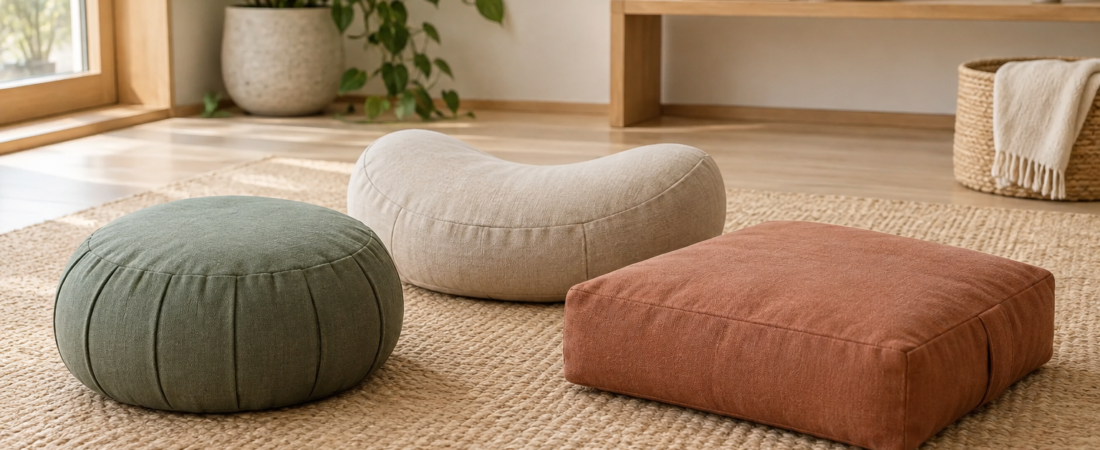
| Shape | Often useful for | Possible limitation |
|---|---|---|
| Round zafu | A compact, traditional-style seat with flexible leg placement | A high or very firm model may feel unstable to some beginners |
| Crescent | More room around the thighs and a gently sloped sitting area | Shape and support vary considerably between makers |
| Rectangular | A broad, stable platform and simple storage | May feel less adaptable for certain cross-legged positions |
| Meditation bench | Kneeling positions for people who prefer not to sit cross-legged | Requires careful height and angle selection; not comfortable for everyone |
| Chair | Anyone who is more comfortable or stable with feet supported on the floor | Some dining chairs are too soft, deep, or high for a steady posture |
Shape names are not standardized, so compare actual dimensions rather than relying only on product labels. A removable filling can also change how a cushion behaves over time.
Firmness and Filling
Buckwheat Hulls
Buckwheat-hull cushions usually feel moldable and relatively firm. The filling shifts as you settle, allowing small shape adjustments. They can also be heavier, make a rustling sound, and require dry storage.
Kapok or Fiber Fill
Fiber-filled cushions are often lighter and quieter. Depending on construction, they may feel springier and may compress with use. Check whether the filling can be added, removed, or replaced.
Foam
Foam can provide a consistent shape, but density and heat retention vary. Product descriptions such as “high density” are difficult to compare without actual specifications, so prioritize a return policy when you cannot try the cushion first.
No filling is inherently best. Consider weight, sound, adjustability, allergies or sensitivities, storage conditions, and how quickly the material is likely to compress.
Seven Features Worth Checking Before You Buy
- Actual dimensions: Look for height, width, and depth in inches or centimeters.
- User weight guidance: If provided, treat it as one data point rather than a guarantee of comfort.
- Removable filling: This makes height and firmness easier to adjust.
- Washable outer cover: A zipper and clear care instructions make routine cleaning easier.
- Carry handle and total weight: Important if you move the cushion between rooms or classes.
- Floor surface: A slick floor may require a mat or nonslip layer.
- Return policy: Useful when height and firmness cannot be judged online.
A Five-Minute Home Fit Test
- Place folded blankets on a nonslip surface.
- Sit near the front portion rather than sinking into the center.
- Choose a natural leg position; do not force a lotus posture.
- Notice whether you can balance without gripping or leaning strongly.
- Change the height and repeat briefly.
Stop if you experience sharp pain, numbness, dizziness, weakness, breathing difficulty, or worsening symptoms. A cushion is not a treatment for persistent pain or mobility problems. If you are recovering from surgery or injury, pregnant, or living with a medical condition that affects safe movement, ask a qualified healthcare professional about an appropriate setup.
Common Buying Mistakes
- Buying by appearance before checking dimensions.
- Assuming the firmest or highest cushion is automatically more supportive.
- Choosing a posture shown in marketing photos even when it does not suit your body.
- Paying extra for vague wellness claims rather than useful construction details.
- Ignoring cleaning instructions, replacement filling, shipping cost, and returns.
How Much Should a Beginner Spend?
Set a budget after the blanket test, not before it. You may discover that a chair or household support works well, or that adjustability is worth paying for. Compare total cost, including a mat, replacement filling, removable cover, shipping, and possible return fees. Avoid treating a higher price as evidence of better health outcomes.
Frequently Asked Questions
Is a round or crescent cushion better for beginners?
Neither shape is universally better. A round cushion is versatile and compact; a crescent may provide more thigh space. Actual height, firmness, and fit matter more than the label.
Can I meditate in a chair instead?
Yes. A stable chair with the feet supported can be a practical option. Floor sitting is not required for breathing practice, quiet attention, or beginner-friendly seated qigong.
Will a meditation cushion fix back or knee pain?
A cushion may change comfort or position, but it should not be presented as a treatment. Persistent, severe, or worsening pain deserves qualified medical assessment.
How long should I test a cushion?
Begin with a few comfortable minutes. Fit can feel different after the filling settles, so check the return window and avoid long sessions while you are still adapting.
A Practical Final Checklist
- I tested approximate height with folded blankets.
- I compared actual dimensions rather than product names alone.
- I understand the filling, weight, cleaning instructions, and adjustability.
- I checked the full price and return policy.
- I am not relying on the product to diagnose or treat a health problem.
For a gentle seated practice that does not require special equipment, read Seated Qigong for Beginners. You can also explore Qigong Breathing for Beginners.
Medical Disclaimer
This article is for general educational purposes only. It is not medical advice and is not a substitute for diagnosis, treatment, or guidance from a qualified healthcare professional. Stop any practice that causes pain, dizziness, breathing difficulty, numbness, weakness, or worsening symptoms.
Leave a Reply