Disclosure: This guide currently contains no affiliate links. If affiliate links are added later, we may earn a commission at no additional cost to you. Our editorial judgments remain independent.
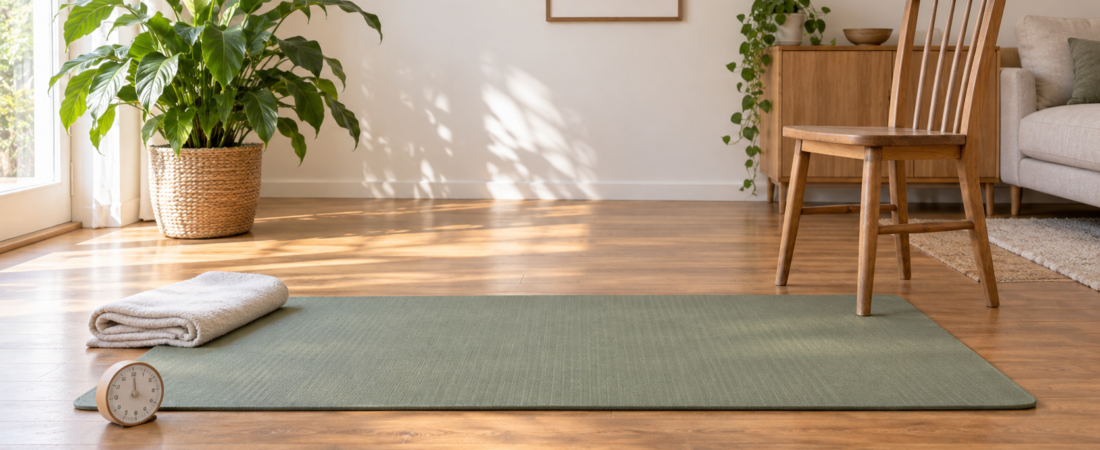
A useful at-home qigong practice setup can be remarkably simple: enough clear space to move comfortably, a stable surface, clothing that does not restrict you, and a way to follow safe instruction. A chair, mat, or timer may help, but none is automatically required.
This guide separates practical essentials from optional purchases. It does not rank brands, claim first-hand product testing, or suggest that equipment can produce a health result. Your safest setup depends on the movements, your home, and your individual condition.
The Short Answer
| Setup item | How important is it? | What matters most |
|---|---|---|
| Clear practice space | Essential | Enough room to move without striking furniture |
| Stable floor surface | Essential | Dry, level, uncluttered, and not slippery |
| Comfortable clothing | Useful | Unrestricted movement and suitable temperature |
| Chair | Optional support | Firm, stable, and free of wheels |
| Exercise mat | Optional | Nonslip surface and edges that remain flat |
| Timer | Optional | Easy to operate without interrupting practice |
| Books or videos | Optional learning aid | Clear instruction, suitable level, and responsible safety guidance |
Before shopping, try a short session with what you already own. This reveals whether you actually need more grip, a chair for support, a quieter timer, or better instruction.
1. Start With Clear, Usable Space
The first requirement is not a product. It is a clear area where your arms and legs can move without contacting a table, lamp, shelf, pet, or other obstacle. You should also have enough room to change direction and to sit down or stand up if the practice includes those transitions.
- Move loose cords, small rugs, bags, and low objects out of the practice path.
- Check that the floor is dry, level, and adequately lit.
- Keep children and pets from unexpectedly crossing the space.
- Leave a clear route to a stable chair or wall if you may need support.
A dedicated room is unnecessary. A small living-room or bedroom area can work if it is cleared before each session.
2. Decide Whether You Need a Mat
Many standing qigong movements can be practiced on an ordinary stable floor. A mat may add grip or define a practice area, but a thick, soft, wrinkled, or sliding mat can make balance less predictable.
A mat may be useful when
- The floor surface is hard and the practice includes seated or kneeling work.
- You want a visible boundary for a small practice space.
- The mat provides reliable grip without bunching or curling.
What to compare before buying
- Grip on your actual floor material.
- Thickness and firmness rather than softness alone.
- Whether the corners and edges stay flat.
- Dimensions, weight, cleaning instructions, odor, and return policy.
Do not assume that a premium yoga mat or a mat labeled specifically for qigong is necessary. Test your existing floor first.
3. Use a Chair When It Makes Practice More Accessible
A chair can support seated practice, provide a place to rest, or serve as a nearby point of reference. Choose a firm chair that does not roll, swivel, rock, or fold unexpectedly. All legs should contact the floor evenly.
Place the chair where you can approach it without stepping around clutter. If you plan to touch it during movement, confirm that light contact will not cause it to slide or tip. A chair is not a substitute for individualized balance or rehabilitation guidance.
For a complete chair-based option, see our Seated Qigong for Beginners guide.
4. Wear Clothing That Lets You Move Naturally
You do not need a traditional uniform. Ordinary clothing may be enough when it allows comfortable movement, stays at a suitable temperature, and does not drag on the floor or catch on furniture.
- Check whether sleeves and trouser legs interfere with hand or foot placement.
- Remove objects from pockets that press, swing, or fall out.
- Avoid jewelry or accessories that can snag.
- Choose footwear, socks, or bare feet according to the surface, instruction, and your safety needs.
The U.S. Centers for Disease Control and Prevention advises wearing clothing and footwear that feel comfortable and help keep you safe while being active. A specialized outfit is mainly a preference unless a class or environment has a specific requirement.
5. Keep Timing Simple
A timer can help you avoid repeatedly checking the clock. It does not need to be a dedicated wellness device. A basic kitchen timer, watch, or phone set to a gentle alert may be sufficient.
- Choose an alert you can hear without making it startlingly loud.
- Silence unrelated notifications when using a phone.
- Place the device where you will not need to reach awkwardly.
- Begin with a comfortable duration instead of treating a longer session as automatically better.
Our 10-minute qigong breathing practice offers a short starting structure that requires no equipment.
6. Evaluate Books, Videos, and Classes Carefully
A book or video may help you remember a sequence, but it cannot observe your movement or adapt instruction in real time. Before paying for a course or learning resource, look beyond production quality and dramatic testimonials.
- Is the intended level and physical demand explained clearly?
- Does the instructor describe relevant training and teaching experience?
- Are modifications and stopping points included?
- Are traditional ideas distinguished from established scientific evidence?
- Does the resource avoid cure claims, fear-based sales, and pressure to buy supplements?
- Can you preview the teaching style and understand the refund policy?
No U.S. national licensing standard applies to qigong instruction. A certificate name by itself therefore does not establish teaching quality. Ask what the training involved and whether the instructor can work within their scope.
What You Probably Do Not Need
- An expensive “energy” mat or device.
- A traditional costume for ordinary home practice.
- Incense, candles, crystals, or decorative objects.
- Weights, resistance tools, or large exercise machines for a basic beginner routine.
- Supplements, herbal products, or special drinks sold as necessary for qigong.
- Multiple paid subscriptions before you know what type of instruction suits you.
Products that promise to “detox,” correct disease, unlock energy, or guarantee results should not be treated as established medical claims. Equipment may improve convenience or comfort, but it does not create the practice for you.
Three Sensible Budget Levels
Use what you own: $0
Clear a safe area, wear comfortable everyday clothing, use a stable household chair if helpful, and follow a short responsible guide. This is enough to learn whether regular home practice appeals to you.
Solve one specific problem
Buy a mat only if grip or floor comfort is a real issue, a timer only if device interruptions are a problem, or a lightweight clothing layer only if your current clothing restricts movement. Compare dimensions and return terms before price or appearance.
Invest in instruction
If you want feedback, spending on an appropriately qualified instructor or well-structured course may be more useful than accumulating accessories. Review the teaching scope, safety approach, schedule, total cost, cancellation terms, and access period.
A Five-Minute Setup Check
- Stand or sit in the center of your proposed practice area and slowly reach in each direction.
- Remove trip hazards and check the floor for moisture or sliding edges.
- Place a stable chair nearby if you may need to sit or pause.
- Adjust lighting, temperature, and clothing before beginning.
- Choose a brief routine and make sure you can stop it easily.
Stop if you develop sharp pain, dizziness, faintness, breathing difficulty, numbness, weakness, or worsening symptoms. People who are pregnant, recovering from surgery or injury, living with a medical condition, or concerned about balance should seek individualized guidance before beginning or modifying a movement practice.
Frequently Asked Questions
Do I need a mat for qigong?
Not always. Many standing practices can be done on a stable ordinary floor. A mat is useful only when it improves grip, comfort, or the definition of your practice area without creating a new trip or balance problem.
Can I practice qigong in a small apartment?
Yes, if the selected routine fits the available space. Choose compact or seated movements and verify that you can reach, turn, and stop without contacting furniture.
Is barefoot practice required?
No universal rule applies. The safest choice depends on the floor, the movement, the instruction, and your individual needs. Avoid slippery socks or unstable footwear.
Is a mirror useful?
A mirror can show general position, but it may also distract you or encourage awkward turning to check your reflection. It cannot replace qualified feedback, and it is not essential for beginning.
The Practical Buying Rule
Start without specialized equipment. After several short sessions, name one concrete problem before buying anything: insufficient grip, uncomfortable floor contact, lack of stable seating, distracting notifications, restrictive clothing, or unclear instruction. Purchase only the item that addresses that problem, and favor transparent specifications, safe construction, reasonable care requirements, and a usable return policy.
For more buying criteria, visit our Product Guides or compare a meditation cushion, kneeling bench, and chair.
Sources and Safety Context
- National Center for Complementary and Integrative Health: Qigong—What You Need To Know
- National Center for Complementary and Integrative Health: Tai Chi—What You Need To Know
- Centers for Disease Control and Prevention: Places to Be Physically Active
NCCIH describes qigong as involving regulation of attention, breathing, movement, and posture. It reports that qigong appears generally safe, while also noting that individual circumstances—including pregnancy and health conditions—may require professional guidance or modification.
Medical Disclaimer
This article is for general educational purposes only. It is not medical advice and is not a substitute for diagnosis, treatment, rehabilitation, or guidance from a qualified healthcare professional.
Leave a Reply